
Reddit Keyword Research: Find Low-Competition Keywords in 2026
If you’ve done SEO for more than a few weeks, you’ve probably noticed something uncomfortable.
You can do everything “right” and still get nothing.
You pick low-difficulty keywords.
You follow the SERP structure.
You write clean, well-formatted content.
And then… silence.
No traffic. No traction. No feeling that a real human was helped.
This is the point where most founders assume SEO is slow, saturated, or only works for companies with authority. The truth is simpler and more frustrating: you’re optimizing for searches, not for confusion.
People don’t go to Google because they love keywords. They go because something feels unclear, risky, or broken. Keyword tools strip that context away. Communities don’t.
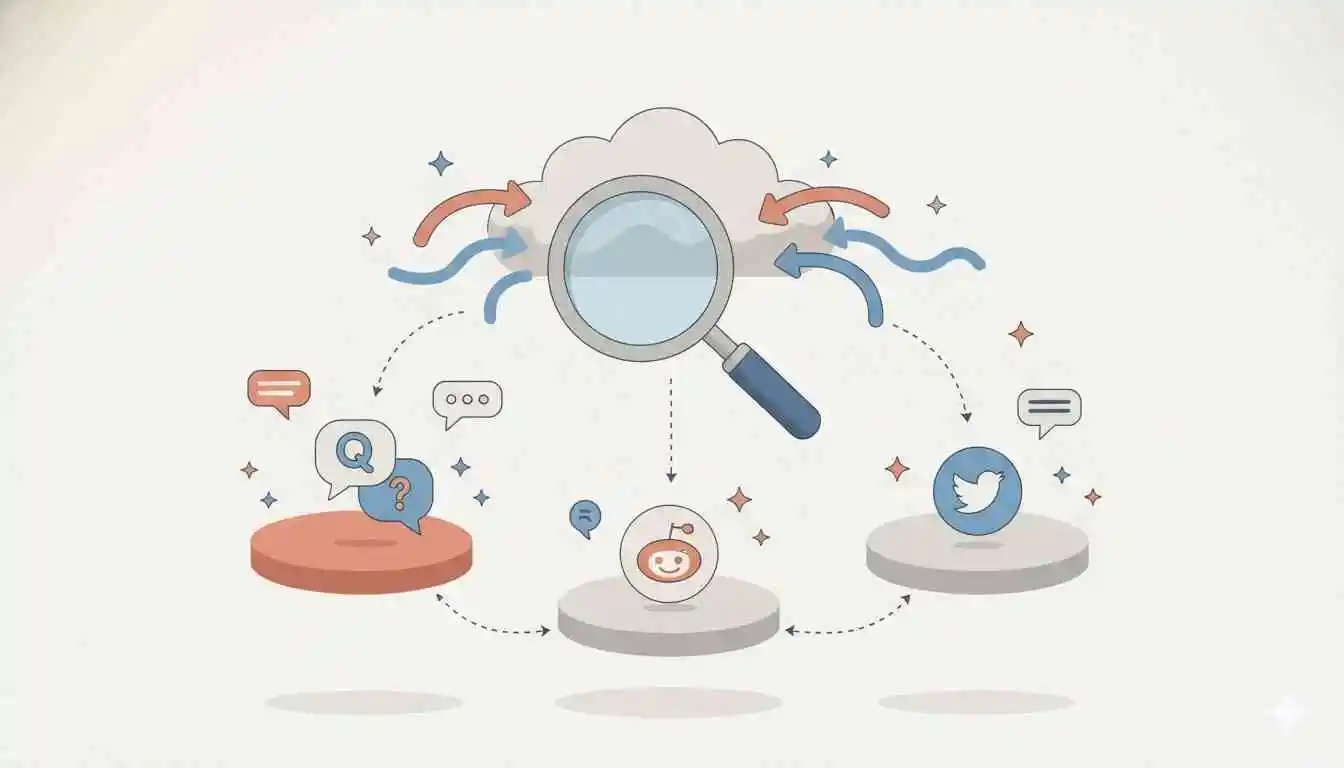
Reddit, Quora, and Twitter are not “growth channels” in this context. They’re raw, unfiltered transcripts of what people wish SEO tools would tell you.
This article shows how to use all three to discover keywords that come with intent, emotion, and urgency already baked in.
Who this is really for
Picture a solo founder or early SaaS team. You’re not trying to win SEO at scale yet. You just want content that:
- feels obviously relevant to your audience
- answers real questions people are already asking
- doesn’t sound like it was generated by a keyword spreadsheet
You don’t need thousands of keywords. You need clarity.
That’s what these platforms give you when you know how to listen.
Why community-driven keyword discovery works better early
Traditional keyword research answers “what gets searched.” Community research answers “what hurts.”
That difference matters most when:
- your domain has low authority
- your audience is technical, skeptical, or founder-heavy
- your product solves a problem people don’t fully understand yet
In those situations, ranking comes from alignment, not optimization.
When someone reads your article and thinks “this sounds exactly like me,” they stay longer, scroll further, and trust faster. Google notices those behaviors. You don’t need to game the algorithm if your content fits the reader tightly.
Reddit, Quora, and Twitter each surface that fit in different ways.
Reddit: discovering pain before it becomes a keyword
Reddit is where people talk before they know how to phrase a search.
That’s its superpower.
On Reddit, users don’t ask “best SaaS SEO strategy.” They ask things like:
- “Why did my traffic drop even though I didn’t change anything?”
- “Am I wasting time writing blogs for my startup?”
- “Everyone says SEO compounds, but I see nothing after 6 months”
Those are not keywords yet. They’re pre-keyword thoughts.
How to mine Reddit effectively
Start with a single relevant subreddit. One is enough. More just creates noise.
Sort posts by “Top” over the past year. This filters out one-off frustrations and shows you issues that resonated widely.
Now read slowly. Not to extract advice, but to understand what triggered the post. Pay attention to:
- how the problem is described
- what the user already tried
- what outcome they expected and didn’t get
For example, a thread titled “SEO feels like a scam” is not about SEO being a scam. It’s about mismatched expectations. That insight alone can fuel multiple articles.
The real keyword isn't "SEO scam."
It's something closer to "why SEO doesn't work for early-stage startups."
That phrasing comes from understanding emotion, not tools.
Quora: capturing fully formed intent
If Reddit is raw emotion, Quora is structured doubt.
People go to Quora after they’ve tried to think through a problem and want confirmation. That makes it ideal for discovering comparison and decision-stage keywords.
On Quora, you’ll see questions like:
- “Is SEO worth it compared to paid ads for SaaS?”
- “What’s the biggest mistake startups make with content marketing?”
- “Why do some blogs rank with bad writing?”
These are not casual thoughts. They’re people trying to decide something.
How to extract usable keywords from Quora
Search broadly. Don’t type keywords; type situations.
Instead of “SEO tool,” search:
- “startup SEO”
- “content marketing not working”
- “traffic but no conversions”
Open questions with high follower counts. Followers signal ongoing relevance, not just curiosity.
Read the question carefully, then ignore most answers. Focus on the question framing. That’s where intent lives.
For example, “Is SEO dead for small websites?” is really about fear of wasted effort. A better content angle is not “SEO is not dead,” but “When SEO feels dead and what to do instead.”
Quora helps you find keywords that map cleanly to decision-making moments.
Twitter (X): discovering language before it stabilizes
Twitter is where ideas form in public, before they’re refined.
This matters because SEO content often fails not due to wrong topics, but wrong language. Twitter shows you how people describe problems when they’re not trying to sound correct.
Look for tweets that:
- get replies, not just likes
- trigger disagreement
- are written by practitioners, not influencers
For example, a tweet saying: “SEO advice online assumes you have infinite time and zero pressure.”
That single sentence reveals:
- a frustration
- a hidden assumption
- a positioning opportunity
You won’t find that in a keyword tool.
How Twitter informs keyword discovery
Twitter helps you refine:
- article titles
- subheadings
- emotional framing
A Reddit thread gives you the problem.
Quora gives you the decision context.
Twitter gives you the words people actually use.
When your article mirrors that language, it feels natural, not optimized.
Combining all three into one usable workflow
Here’s how this looks when done together.
- You notice on Reddit that founders feel SEO “isn’t working.”
- On Quora, you see questions comparing SEO vs paid ads.
- On Twitter, you see people complain that SEO advice ignores early-stage reality.
That’s not three topics. That’s one.
A strong content angle might be:
"Why SEO Feels Broken for Early-Stage Founders (and What Actually Works)"
That article can rank because:
- the pain is real
- the intent is clear
- the language matches how people think, not how tools label
This is keyword discovery driven by understanding, not volume.
Turning community insights into content that ranks
The mistake most people make is jumping from “interesting thread” straight to writing.
Pause first.
Ask yourself:
- What belief does this person hold that might be wrong?
- What outcome were they expecting?
- What would have helped them six months earlier?
Your content should answer that, not just the surface question.
When you write from that angle, keywords naturally appear. You don’t force them; they emerge because you’re aligned with intent.
Why this approach compounds over time
The more you do this, the sharper your intuition gets.
You start spotting patterns:
- the same confusion expressed differently
- the same mistake repeated across platforms
- the same emotional triggers behind different keywords
At that point, keyword tools become validation, not discovery.
Communities give you the signal. Tools give you the scale.
That’s the correct order.
The main thing to remember
People don’t search because they want information. They search because they want relief.
Reddit shows you the frustration.
Quora shows you the hesitation.
Twitter shows you the language.
If your content addresses all three, it doesn’t just rank. It resonates.
Your next article shouldn’t start from a keyword. It should start from a human moment you recognize.
That’s how SEO stops feeling like guesswork and starts feeling obvious.
Thanks for reading! ❤️
Read Next



Stop guessing your SEO strategy
LLaMaRush gives you data-driven content plans and automated insights to rank higher, faster.
Start Ranking Today